Small Block Chevy 383 Vs. Big Block Mopar 383: A Comprehensive V8 Engine Comparison
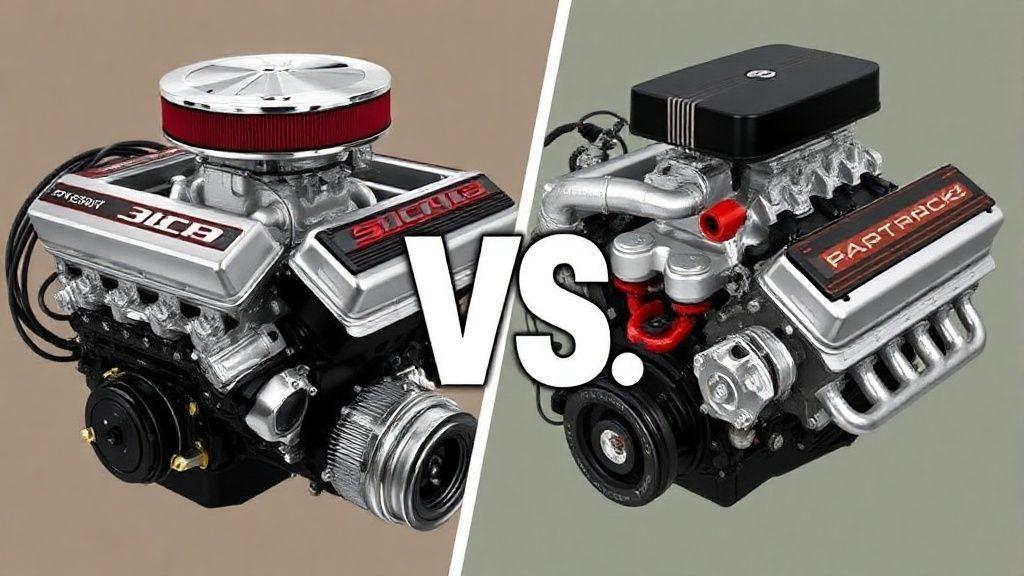
Small Block Chevy 383 Vs. Big Block Mopar 383: A Comprehensive V8 Engine Comparison
The world of V8 engines is a thrilling one, with numerous options available for enthusiasts and car owners. Two popular models that often come up in discussions are the small-block Chevy 383 and the big-block Mopar 383. Despite having similar displacements, these two engines have distinct differences that set them apart. In this article, we will delve into the comparisons between these two V8 engines, exploring their design, features, specifications, and prices.
Introduction to the Engines
The small-block Chevy 383 is a General Motors engine that has been a staple in the automotive world for decades. Known for its compact size and lightweight design, this engine has been a favorite among car enthusiasts and racers alike. On the other hand, the big-block Mopar 383 is a Chrysler engine that boasts a larger displacement and more powerful performance. This engine has been used in various Dodge and Plymouth models, including the iconic Charger and Challenger.
Design & Dimensions
The design and dimensions of these two engines are significantly different. The small-block Chevy 383 has a smaller overall size and weight, making it ideal for smaller vehicles and applications where space is limited. The big-block Mopar 383, on the other hand, is larger and heavier, requiring more space and support.
| Engine | Length | Width | Height | Weight |
|---|---|---|---|---|
| Small Block Chevy 383 | 29.5 inches | 24.5 inches | 24.5 inches | 475 pounds |
| Big Block Mopar 383 | 33.5 inches | 27.5 inches | 27.5 inches | 635 pounds |
Feature Comparison
Both engines have unique features that set them apart from one another. The small-block Chevy 383 has a aluminum block and iron cylinder heads, while the big-block Mopar 383 has a cast iron block and aluminum cylinder heads. Additionally, the small-block Chevy 383 has a hydraulic roller camshaft, while the big-block Mopar 383 has a solid lifter camshaft.
| Engine | Block Material | Cylinder Head Material | Camshaft Type |
|---|---|---|---|
| Small Block Chevy 383 | Aluminum | Iron | Hydraulic Roller |
| Big Block Mopar 383 | Cast Iron | Aluminum | Solid Lifter |
Engine Specifications
The engine specifications of these two engines are also different. The small-block Chevy 383 has a bore of 4.00 inches and a stroke of 3.48 inches, while the big-block Mopar 383 has a bore of 4.25 inches and a stroke of 3.38 inches.
| Engine | Bore | Stroke | Displacement | Compression Ratio |
|---|---|---|---|---|
| Small Block Chevy 383 | 4.00 inches | 3.48 inches | 383 cubic inches | 9.6:1 |
| Big Block Mopar 383 | 4.25 inches | 3.38 inches | 383 cubic inches | 9.2:1 |
Price Comparison
The prices of these two engines can vary depending on the application and the vendor. However, in general, the small-block Chevy 383 is less expensive than the big-block Mopar 383.
| Engine | Price Range |
|---|---|
| Small Block Chevy 383 | $2,500 – $5,000 |
| Big Block Mopar 383 | $4,000 – $7,000 |
Conclusion
In conclusion, the small-block Chevy 383 and the big-block Mopar 383 are two unique V8 engines with distinct differences. While they share similar displacements, their design, features, specifications, and prices are all different. Whether you are a car enthusiast, a racer, or simply a car owner, understanding these differences can help you make an informed decision when choosing an engine for your vehicle.
Frequently Asked Questions
Here are some frequently asked questions about the small-block Chevy 383 and the big-block Mopar 383:
Q1: What is the difference between the small-block Chevy 383 and the big-block Mopar 383?
A1: The small-block Chevy 383 and the big-block Mopar 383 have different designs, features, specifications, and prices.
Q2: Which engine is more powerful, the small-block Chevy 383 or the big-block Mopar 383?
A2: The big-block Mopar 383 is generally more powerful than the small-block Chevy 383.
Q3: What is the bore and stroke of the small-block Chevy 383?
A3: The bore of the small-block Chevy 383 is 4.00 inches, and the stroke is 3.48 inches.
Q4: What is the compression ratio of the big-block Mopar 383?
A4: The compression ratio of the big-block Mopar 383 is 9.2:1.
Q5: How much does the small-block Chevy 383 cost?
A5: The price range of the small-block Chevy 383 is $2,500 – $5,000.
Q6: What is the difference between a hydraulic roller camshaft and a solid lifter camshaft?
A6: A hydraulic roller camshaft is a type of camshaft that uses hydraulic lifters to operate the valves, while a solid lifter camshaft uses solid lifters.
Q7: Can the small-block Chevy 383 be used in a big-block Mopar application?
A7: No, the small-block Chevy 383 is not compatible with big-block Mopar applications.
Q8: What is the displacement of the big-block Mopar 383?
A8: The displacement of the big-block Mopar 383 is 383 cubic inches.
Q9: Is the small-block Chevy 383 a good engine for racing?
A9: Yes, the small-block Chevy 383 is a popular engine for racing due to its compact size and lightweight design.
Q10: Can the big-block Mopar 383 be used in a small-block Chevy application?
A10: No, the big-block Mopar 383 is not compatible with small-block Chevy applications.