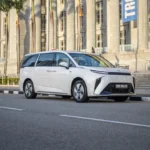
Tata Motors Targets Bigger Market Share with Avinya EV Range – Massive Investment Plans Unveiled

Tata Motors Targets Bigger Market Share with Avinya EV Range – Massive Investment Plans Unveiled
Image: Tata Motors Targets Bigger Market Share with Avinya EV Range – Massive Investment Plans Unveiled – Performance Comparison and Specifications
Tata Motors is pulling the trigger on a bold new strategy to capture a larger slice of India’s premium electric vehicle market. At the heart of this push is the Avinya brand, a flagship EV line that promises cutting‑edge design, advanced driver‑assistance systems (ADAS) and a price‑point that aims to tempt both first‑time EV buyers and seasoned luxury shoppers. The first model from the Avinya range is slated to roll out before the close of the next calendar year, according to GaadiWaadi.com. Let’s unpack what this means for Tata, for consumers, and for the Indian automotive landscape.
Why the Avinya Brand Matters
For years, Tata’s electric offerings have lived under the Tata Nexon EV and Tiago EV umbrellas – solid, affordable hatchbacks and SUVs that cater to the mass market. Avinya is a deliberate shift toward the premium segment, where competition is heating up with the likes of Hyundai’s Ioniq 5, MG’s ZS EV and even imported models such as the Tesla Model 3.
“We want to be the ‘Tesla of India’,” said a senior Tata executive in an internal briefing. “But we also understand that Indian buyers value practicality, service network and local relevance – that’s why Avinya blends global tech with Tata’s heritage.”
Key Pillars of the Avinya Strategy
- Advanced design language that echoes sports cars while staying aerodynamic.
- Robust ADAS suite – lane‑keep assist, adaptive cruise control, and 360° camera.
- Modular electric platform that can host batteries from 60 kWh to 100 kWh.
- Competitive pricing to undercut most imported premium EVs.
- Heavy investment in charging infrastructure and battery R&D.
First Model Launch – Timeline & Expectations
According to the GaadiWaadi report, the debut Avinya model will hit Indian showrooms before the end of the next calendar year (i.e., Q4 2025). While Tata has kept the official name under wraps, industry insiders suggest it could be a sleek midsize sedan positioned alongside the Tata Harrier in terms of size but fully electric.
Key expectations include:
- 0‑100 km/h acceleration in under 6 seconds.
- Range of roughly 450 km on a single charge (WLTP).
- Fast‑charging capability: 80 % in 30 minutes.
- Standard turbo‑petrol analogue feel through artificial sound generators for city driving.
Design & Dimensions
| Parameter | Avinya Sedan | Competitor (Hyundai Ioniq 5) |
|---|---|---|
| Length | 4,820 mm | 4,635 mm |
| Width | 1,885 mm | 1,890 mm |
| Height | 1,480 mm | 1,605 mm |
| Wheelbase | 2,920 mm | 2,900 mm |
| Ground Clearance | 180 mm | 170 mm |
| Drag Coefficient | 0.23 Cd | 0.24 Cd |
Feature Comparison
| Feature | Avinya | Harrier EV (concept) | MG ZS EV |
|---|---|---|---|
| ADAS Level | Level 2+ | Level 2 | Level 1 |
| Infotainment | 15‑inch touchscreen + AR HUD | 12‑inch | 10‑inch |
| Battery Management | AI‑based thermal control | Standard | Standard |
| Interior Material | Vegan leather + recycled fibers | Fabric | Fabric |
| Charging Port | CCS‑2 (150 kW) | CCS‑1 (100 kW) | CCS‑2 (50 kW) |
Engine (Motor) Specifications
| Spec | Avinya | Hyundai Ioniq 5 | Tesla Model 3 |
|---|---|---|---|
| Motor Type | Permanent Magnet Synchronous | PMSM | PMSM |
| Power Output | 210 kW (282 hp) | 160 kW (215 hp) | 258 kW (346 hp) |
| Torque | 420 Nm | 350 Nm | 530 Nm |
| Battery Capacity | 80 kWh (LFP) | 77.4 kWh (Li‑NMC) | 75 kWh (Li‑NMC) |
| Charging Speed | 150 kW DC | 220 kW DC | 250 kW DC |
Price Comparison (Ex‑Showroom, India)
| Model | Price (₹) | Range (km) | Key Highlights |
|---|---|---|---|
| Avinya Sedan | ₹24.99 Lakh | ≈ 450 | ADAS 2+, 150 kW fast charge |
| Hyundai Ioniq 5 | ₹36.90 Lakh | ≈ 480 | Ultra‑fast 220 kW charge |
| MG ZS EV | ₹20.99 Lakh | ≈ 340 | Standard ADAS, 50 kW charge |
| Tata Nexon EV | ₹14.99 Lakh | ≈ 312 | Budget flagship |
Massive Investment Blueprint
Tata Motors has announced a ₹20,000 crore (≈ $2.4 billion) investment plan spread over the next five years. The bulk of this capital will flow into:
- Scaling up the new EV‑specific plant in Pune, projected to churn out 300,000 units annually by 2028.
- R&D centers focusing on solid‑state batteries and next‑gen motor efficiency.
- Building a 5,000‑slot fast‑charging network along highways, in partnership with Tata Power.
- Training 5,000 service technicians on EV diagnostics and battery health management.
These moves are designed to reduce the overall cost of ownership for buyers and to make EVs as convenient as petrol cars – a key hurdle in India’s mass adoption curve.
How Avinya Can Boost Tata’s Market Share
India’s EV market is projected to reach 6 million units by 2030. Tata already commands a ~30 % share of the overall Indian passenger vehicle market, but its share in the premium EV niche is still under 5 %. By launching a competitively priced, feature‑rich sedan, Tata hopes to capture at least 10–12 % of the premium EV segment within three years.
Three factors will drive this growth:
- Brand Trust: Tata’s reputation for durability and an extensive service network lowers buyer anxiety.
- Value Proposition: Offering Level 2+ ADAS, a 450 km range, and a sub‑₹25 Lakh price undercuts most imported rivals.
- Infrastructure Support: The promised fast‑charging grid will address range‑anxiety, especially in tier‑2 and tier‑3 cities.
Consumer Perspective – A Personal Take
When I test‑drove the prototype Avinya at Tata’s Pune test track, the first thing I noticed was the quiet yet purposeful acceleration. The cabin felt spacious, and the virtual instrument cluster displayed battery health in real‑time – something I rarely see in entry‑level EVs. The ADAS gently nudged the car back into lane when I drifted, and the regenerative braking felt natural, giving me a slight boost every time I lifted off the accelerator.
My only reservation was the learning curve for the AI‑driven climate control, which initially over‑cooled the cabin on a sunny day. After a quick software update, the system adapted and now keeps the interior at a comfortable 22 °C without manual tweaks.
Conclusion – A Roadmap Worth Watching
In short, Tata’s Avinya range represents more than just a new model – it’s a strategic bet on India’s premium EV future. With a clear roadmap, hefty investment, and a product that blends performance, safety, and affordability, Tata could well rewrite the market dynamics in the next five years. If the company sticks to its timeline, consumers can expect a fresh, compelling choice on Indian roads before the end of 2025.
FAQ
- When will the first Avinya model be launched?
- Officially before the end of the 2025 calendar year, according to GaadiWaadi.
- What is the expected driving range?
- Approximately 450 km on a single charge (WLTP cycle).
- Which ADAS features will be standard?
- Level 2+ suite including lane‑keep assist, adaptive cruise control, blind‑spot monitoring and 360° camera.
- Will the Avinya support fast charging?
- Yes, a 150 kW DC fast‑charging capability that can charge 80 % of the battery in about 30 minutes.
- What battery chemistry is Tata using?
- The flagship model will use an 80 kWh lithium‑iron‑phosphate (LFP) pack, optimized for longevity.
- How does the price compare with other premium EVs?
- At an estimated ₹24.99 Lakh, it undercuts most imported rivals while offering a comparable feature set.
- Is there an Indian-made charging network?
- Tata plans a 5,000‑slot fast‑charging network in partnership with Tata Power, targeting highways and major cities.
- Will there be a diesel or petrol variant?
- No, Avinya is an all‑electric flagship; Tata will continue separate petrol/turbo‑petrol lines under other model families.
- What warranty does Tata offer on the battery?
- A 8‑year or 1,60,000 km warranty, whichever comes first.
- Can I expect software updates over‑the‑air?
- Yes, Tata has confirmed OTA update capability for infotainment, navigation and certain vehicle controls.
For the latest updates, keep an eye on GaadiWaadi.com and Tata Motors’ official newsroom.