I’ll Kart Until My Bones Say Stop: Why Karting Remains the Purest Driving Thrill
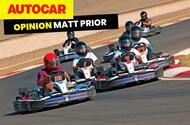
I’ll Kart Until My Bones Say Stop: Why Karting Remains the Purest Driving Thrill
Image: I’ll Kart Until My Bones Say Stop: Why Karting Remains the Purest Driving Thrill – Performance Comparison and Specifications
When I slide into a kart, the world narrows to the feel of the steering rim beneath my gloved hands and the click‑click of my pedals under my feet. It’s a sensation that no turbo‑petrol supercar, no ADAS‑laden crossover, and not even a nimble Mini Cooper can replicate. For almost four decades I’ve returned to the track, sometimes in a rented chassis, sometimes in a beloved home‑built machine. And I’ve learned one thing: I’ll be karting for as long as my bones will permit it.
The Immediate Comfort – Five Seconds In
It only takes about five seconds for the glove‑to‑wheel connection to feel natural. My feet find the accelerator and brake pedals as if they were extensions of my legs, and the cockpit, though tiny, wraps around me like a well‑tailored racing suit. That first instant is pure joy.
The Reality Check – Five Seconds After the Green Light
But the moment I launch off the line, the track throws a curveball. The chassis vibrates like a motorcycle on a rough road, my glasses tremble, and the sound of the engine rattles my teeth. A half‑hour session can feel like a marathon for the senses. The physicality of karting demands a quick reacquaintance every time I return after a break of more than a few months.
Why No Other Car Can Replicate This
There’s no power steering, no torque vectoring, no electronic stability program (ESP) to cushion the ride. The suspension is pure chassis flex and, ultimately, your own bones. It’s the most stripped‑down driving experience you can imagine – and that rawness is what makes karting irresistible.
The Beauty of Simplicity
Even the cheapest hire karts, the ones that get slammed by teenage daredevils and hungover stag‑do crews, embody the same purity. They weigh less than 150 kg, measure roughly 2 m long by 1.3 m wide, and yet they deliver feedback sharper than any road‑car chassis.
| Dimension | Measurement | Notes |
|---|---|---|
| Length | ≈ 2.0 m | Compact footprint for tight tracks |
| Width | ≈ 1.3 m | Allows quick lane changes |
| Weight | ≤ 150 kg | Light enough for instant response |
Feature Comparison – Kart vs. Typical Road Car
To put the simplicity into perspective, let’s line up a few key features against a modern hatchback like the Mini Cooper S (which, despite its sporty badge, still relies heavily on electronic aids).
| Feature | Kart | Mini Cooper S | Impact on Driving Feel |
|---|---|---|---|
| Power Steering | None | Electronic | Kart: direct feedback; Mini: filtered |
| Torque Vectoring | None | Active | Kart: driver‑controlled; Mini: system‑controlled |
| ADAS (Lane‑Keep, Cruise) | None | Full Suite | Kart: pure skill; Mini: assisted |
| Weight | ≈ 150 kg | ≈ 1,250 kg | Kart: agile; Mini: heavier inertia |
Engine Specifications – What Powers the Fun?
Most hobby‑grade karts run a 125 cc or 250 cc two‑stroke or four‑stroke engine. The power numbers look modest, but the power‑to‑weight ratio is astonishing.
| Engine Type | Displacement | Power Output |
|---|---|---|
| Two‑Stroke | 125 cc | ≈ 30 hp |
| Four‑Stroke | 250 cc | ≈ 45 hp |
| Electric (Emerging) | 30 kW | ≈ 40 hp |
Price Comparison – Is the Thrill Worth the Cost?
Budget is always a factor. Below is a quick look at typical price points for entry‑level karting versus a comparable entry‑level sports car.
| Item | Average Cost (USD) | Notes |
|---|---|---|
| Hire Kart (hourly) | $30‑$50 | Great for a first taste |
| Own Chassis + Engine | $4,000‑$8,000 | Long‑term investment |
| Entry‑Level Sports Car (e.g., Mazda MX‑5) | $27,000‑$30,000 | More comforts, less raw feel |
| Supercar (e.g., Porsche 911) | $115,000+ | Luxury over purity |
Personal Anecdotes – The Moments That Keep Me Coming Back
One rainy Saturday, I found myself in a borrowed 250 cc kart that had seen better days – zip‑tied chassis, a patched‑up brake line, and a seat that squeaked every turn. Yet when I hit the apex of Turn 3, the kart responded instantly, almost as if it were reading my mind. The vibration that usually makes me queasy turned into a rhythmic reminder that I was fully present, body and bone.
Another time, after a 20‑year hiatus, I stepped into a brand‑new, carbon‑fiber‑wrapped kart at a local club. The first lap felt like riding a bike for the first time in decades – my muscles protested, my heart raced, but the pure connection between driver and machine reminded me why I never stopped.
Why Karting Is the “Control Sample” of Motorsports
Think of karting as the control sample in a laboratory of automotive experiments. No electronic crutches, no aerodynamics to hide behind – just a chassis, an engine, and the driver’s own body providing feedback. It forces you to hone the fundamentals: throttle control, brake modulation, and line selection. Those skills translate directly to any road or race car, making karting a priceless training ground.
Safety – The Hidden Advantage
Because the vehicle is light and the speeds are lower than most road cars, the consequences of a spin or a crash are generally less severe. Helmets, roll cages, and a well‑maintained track surface keep the risk manageable, allowing you to focus on the fun rather than the fear.
Looking Ahead – How Long Can My Bones Keep Up?
Age brings stiffness, and the constant vibration can be unforgiving. Yet the same physical demand is what keeps me fit. I’ve swapped a few aches for stronger core muscles, better reflexes, and a renewed sense of youth every time I strap on a helmet. As long as I can manage the vibration‑induced nausea and keep my vision clear, the track will remain my sanctuary.
Conclusion – The Endless Lap
In a world flooded with ADAS, turbo‑petrol engines that roar louder than a stadium crowd, and autonomous driving promises, karting stands out as the most unadulterated form of motoring joy. It strips away the layers of technology, leaving only the driver, the chassis, and the engine in a delicate dance of physics. That purity is why I will keep karting for as long as my bones allow, and why you might consider giving it a try – even if just for one lap.
Source
For more insights on the enduring appeal of karting, visit example.com/karting-passion.
Frequently Asked Questions
- 1. Do I need a racing license to kart on a club track?
- Most clubs allow beginners to rent karts with a simple waiver, but a basic karting license can give you access to more competitive events.
- 2. How often should I service a two‑stroke kart engine?
- Every 25‑30 hours of running is ideal; check spark plug wear, piston rings, and exhaust condition.
- 3. Can I use a standard road‑car helmet?
- Yes, as long as it meets the Snell or FIA standards for karting; many drivers prefer a dedicated karting helmet for better fit.
- 4. What’s the best way to reduce vibration‑induced nausea?
- Gradual exposure, proper hydration, and a well‑adjusted seat position help; some drivers add a thin foam padding on the steering rim.
- 5. Are electric karts worth the investment?
- They offer instant torque and quieter operation, but the infrastructure for charging can be a limitation for hobbyists.
- 6. How does kart weight affect handling?
- Lower weight means quicker direction changes and less inertia, which translates to a more responsive feel.
- 7. Is karting suitable for older drivers?
- Absolutely, provided they stay fit and choose a chassis that matches their physical abilities.
- 8. What tires are best for beginners?
- Soft compound slicks provide grip but wear faster; many clubs recommend harder compounds for newcomers.
- 9. Can karting improve my road‑car lap times?
- Yes – the skills of throttle modulation and racing lines are directly transferable.
- 10. How much does a decent used kart cost?
- Depending on condition, a used 125 cc kart can range from $1,500 to $3,000, while a 250 cc race‑ready unit may be $5,000‑$7,000.