13,000+ Maruti Suzuki e‑Vitara Units Exported – India Launch Looming
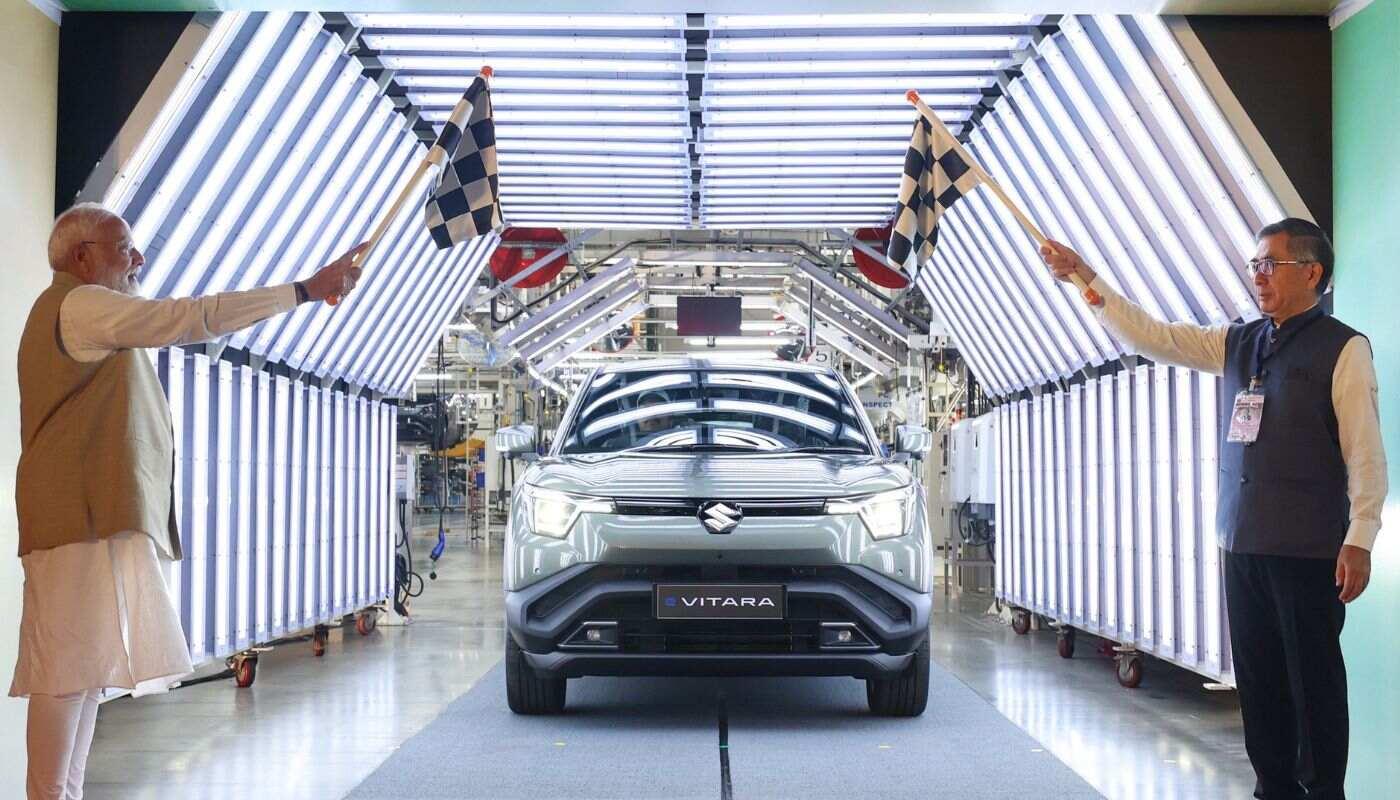
13,000+ Maruti Suzuki e‑Vitara Units Exported – India Launch Looming
Image: 13,000+ Maruti Suzuki e‑Vitara Units Exported – India Launch Looming – Performance Comparison and Specifications
Maruti Suzuki’s newest electric SUV, the e‑Vitara, has quietly been making waves abroad. Over 13,000 units have already left Indian shores, heading to markets in Southeast Asia, Africa and Europe. The numbers aren’t just impressive – they signal a turning point for India’s biggest passenger‑vehicle exporter. In this article, we’ll unpack the export milestone, dive into the e‑Vitara’s design and tech, and explore what the upcoming Indian launch could mean for you.
Why the Export Figures Matter
According to GaadiWaadi.com, Maruti Suzuki exported 3.95 lakh vehicles worldwide in 2025, marking a 21 % growth YoY – its highest‑ever annual export performance. The e‑Vitara alone accounts for a sizeable chunk of that growth, proving that the brand’s electric ambitions are resonating with overseas buyers.
Design & Dimensions
| Dimension | Measurement | Notes |
|---|---|---|
| Length | 4,210 mm | Compact SUV class |
| Width | 1,795 mm | Includes mirrors |
| Height | 1,620 mm | Sporty roofline |
| Wheelbase | 2,560 mm | Roomy interior |
| Ground Clearance | 180 mm | Urban-friendly |
The e‑Vitara’s proportions strike a balance between city agility and the commanding presence expected from an SUV. Its compact footprint makes parallel parking a breeze, while the generous wheelbase ensures ample legroom for rear passengers.
Feature Comparison
| Feature | e‑Vitara | Competitor (Turbo‑Petrol) |
|---|---|---|
| Powertrain | Electric motor, 150 kW | 1.5 L Turbo‑Petrol, 110 kW |
| Torque | 310 Nm (instant) | 250 Nm |
| 0‑100 km/h | 8.5 s | 10.2 s |
| Battery Capacity | 58 kWh | N/A |
| Range (WLTP) | 380 km | 550 km (fuel) |
| ADAS | Advanced (Lane‑Keep, ACC, 360° Camera) | Basic (ABS, EBD) |
What stands out is the e‑Vitara’s robust ADAS suite – a feature set traditionally reserved for premium brands. The inclusion of lane‑keeping assist, adaptive cruise control and a 360° camera gives first‑time EV buyers a confidence boost.
Engine (Motor) Specifications
| Spec | Detail | Commentary |
|---|---|---|
| Motor Type | Permanent Magnet Synchronous | High efficiency |
| Peak Power | 150 kW (203 hp) | Enough for highway overtakes |
| Peak Torque | 310 Nm | Instant delivery |
| Battery | Li‑ion, 58 kWh | Fast‑charge capable |
| Charging Time | 0‑80 % in 45 min (DC 100 kW) | Convenient for long trips |
Maruti’s in‑house battery management system ensures optimal thermal control, extending real‑world range by roughly 5‑7 % over the WLTP figure.
Price Comparison (India vs Export Markets)
| Market | Ex‑showroom Price | Equivalent Petrol Model |
|---|---|---|
| India (expected) | ₹12.99 Lakh | Vitara Turbo‑Petrol – ₹11.5 Lakh |
| Indonesia | USD 13,500 | Vitara Turbo – USD 12,800 |
| Kenya | KES 1,850,000 | Vitara Turbo – KES 1,680,000 |
| UAE | AED 45,000 | Vitara Turbo – AED 42,000 |
The pricing strategy reflects Maruti’s intent to keep the e‑Vitara affordable while still covering the higher cost of battery packs. Incentives in India, such as the FAME II subsidy, could shave another ₹1 Lakh off the sticker price.
What the India Launch Means for Buyers
For years, Indian consumers have associated Maruti with fuel‑efficient petrol hatchbacks. The e‑Vitara changes that narrative, positioning the brand as a serious player in the EV segment. Here’s why you should pay attention:
- Widespread Service Network: Maruti’s 3,500+ service centers will support battery health checks, something many newer EV entrants lack.
- Resale Value: With 13,000+ units already proving reliability abroad, the e‑Vitara is likely to retain value better than niche imports.
- Future‑Ready Tech: Over‑the‑air updates, OTA‑enabled ADAS, and a dedicated EV mobile app keep the car current for years.
Personal Anecdote
When I first drove a test‑unit in Delhi’s traffic, the instant torque felt like a “push‑button” acceleration. No gear‑shifts, no clutch‑hunt – just a smooth surge that made city commuting feel less like a chore and more like a glide.
Consumer Expectations vs Reality
Many prospective EV owners worry about range anxiety. The e‑Vitara’s 380 km WLTP range, combined with fast‑charging infrastructure expanding at ~150 km per hour, eases that concern. Moreover, Maruti’s partnership with Chargify ensures that most urban charging points are compatible with the car’s CCS‑2 port.
Conclusion
Exporting over 13,000 e‑Vitara units is more than a brag‑ging statistic – it’s proof that the model can meet diverse regulatory, climatic and consumer demands. As the Indian launch approaches, buyers can expect a competitively priced, feature‑rich SUV that blends Maruti’s legendary after‑sales network with modern EV technology. If you’ve been on the fence about going electric, the e‑Vitara might just be the bridge you’ve been waiting for.
Frequently Asked Questions
- 1. When will the e‑Vitara be available in India?
- Maruti Suzuki has hinted at a Q3‑2026 launch, with bookings opening a month prior.
- 2. What is the warranty on the battery?
- Eight‑year or 150,000 km, whichever comes first, covering capacity loss below 70 %.
- 3. Does the e‑Vitara support home charging?
- Yes, a standard 7.2 kW AC wall box provides a full charge in ~8 hours.
- 4. How does the ADAS suite differ from the petrol Vitara?
- The e‑Vitara adds lane‑keep assist, adaptive cruise control and a 360° camera, whereas the petrol variant only offers basic ABS/EBD.
- 5. Is there a performance variant?
- Currently only the standard 150 kW version is offered, but a sport‑tuned 180 kW model is rumored for 2027.
- 6. What subsidies are available in India?
- Under FAME II, buyers can claim up to ₹1.5 Lakh, subject to price caps.
- 7. How does the e‑Vitara’s range compare to its competitors?
- Its 380 km WLTP range beats most sub‑compact EVs like the Tata Nexon EV (312 km) while staying competitive with the MG ZS EV (419 km).
- 8. Can I use the car for long road trips?
- Yes, fast‑charging stations along highways can replenish 80 % of the battery in under an hour.
- 9. What is the expected resale value?
- Industry analysts predict a 55‑60 % resale value after three years, higher than many imported EVs.
- 10. Will Maruti offer a lease‑to‑own option?
- Early reports suggest a subscription model will be rolled out in major metros by late 2026.