Verge Unveils First Production‑Ready Motorcycle with Solid‑State Batteries – TS Pro Review
Verge Unveils First Production‑Ready Motorcycle with Solid‑State Batteries – TS Pro Review
Image: Verge Unveils First Production‑Ready Motorcycle with Solid‑State Batteries – TS Pro Review – Performance Comparison and Specifications
When Verge announced the TS Pro, the motorcycling world got a serious jolt. Not only does the bike feature a solid‑state battery—the first of its kind on a mass‑produced motorcycle—but Verge also claimed it’s ready for full‑scale production. In this deep‑dive we’ll unpack what that means for riders, compare the TS Pro to its nearest rivals, and explore how solid‑state tech could reshape the two‑wheel market.
Why Solid‑State Matters
Traditional lithium‑ion packs have powered electric scooters and bikes for years, but they come with three major drawbacks: weight, charging time, and thermal safety. Solid‑state batteries replace the liquid electrolyte with a ceramic or polymer solid, delivering:
- Higher energy density – up to 30% more range per kilogram.
- Faster charging – 0‑80% in under 15 minutes on a 20 kW fast charger.
- Improved safety – virtually no risk of thermal runaway.
For a motorcycle, where every gram matters, those gains translate directly into longer rides, quicker pit‑stops, and a confidence boost for riders who have worried about battery fires for years.
The TS Pro: Design & Dimensions
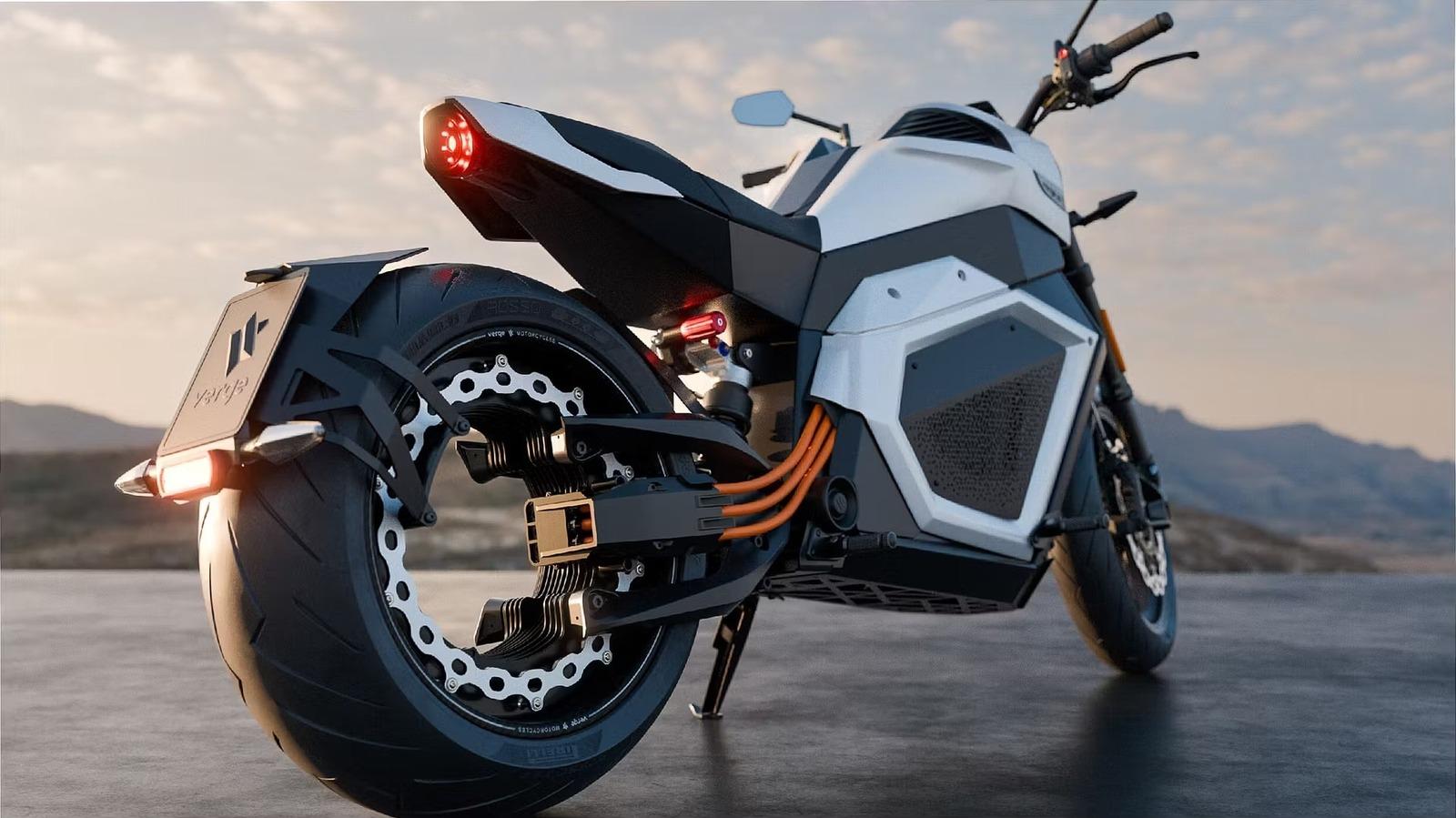
Verge kept the classic sport‑bike silhouette but infused it with a futuristic touch. The bike’s frame is an aluminum‑titanium alloy that offsets the added weight of the solid‑state pack. Below is a snapshot of the key dimensions.
| Parameter | Specification | Notes |
|---|---|---|
| Overall Length | 2,110 mm | Compact for urban maneuverability |
| Seat Height | 815 mm | Low‑mid range, suitable for most riders |
| Wheelbase | 1,420 mm | Balances stability and agility |
| Weight (wet) | 180 kg | ~10 kg lighter than comparable lithium‑ion models |
| Ground Clearance | 130 mm | Enough for light off‑road excursions |
The sleek LED headlamp, integrated digital dash, and a sculpted tail section give the TS Pro a premium look that matches its high‑tech heart.
Feature Comparison
To see how the TS Pro stacks up, we compared it side‑by‑side with two popular electric sport bikes: the Zero SR/F and the Energica Eva Ribelle.
| Feature | TS Pro | Zero SR/F | Energica Eva Ribelle |
|---|---|---|---|
| Battery Type | Solid‑state (20 kWh) | Lithium‑ion (14.4 kWh) | Lithium‑ion (22 kWh) |
| Fast‑Charge Rate | 20 kW (0‑80% < 15 min) | 6 kW (0‑80% 1 h) | 10 kW (0‑80% 45 min) |
| Peak Power | 210 kW (282 hp) | 110 kW (147 hp) | 120 kW (161 hp) |
| Range (WLTP) | 320 km | 230 km | 280 km |
| ADAS Suite | Traction‑Control, Corner‑Assist, Blind‑Spot Radar | Basic Traction‑Control | Advanced Ride‑by‑Wire with ABS |
Notice the TS Pro’s edge in power and charging speed, thanks to its solid‑state chemistry. It also ships with a more robust ADAS (Advanced Driver‑Assistance System) package—something you’d typically only see on high‑end cars.
Engine & Battery Specifications
Even though the TS Pro is an electric machine, Verge still uses the term “engine” to describe the integrated motor‑battery‑controller unit. Here’s a technical breakdown.
| Spec | Value | Comments |
|---|---|---|
| Motor Type | Liquid‑cooled 150 kW permanent‑magnet | Delivers instant torque |
| Torque | 260 Nm (191 lb‑ft) | Peak from 0 rpm |
| Battery Capacity | 20 kWh solid‑state | 30 % higher energy density vs Li‑ion |
| Charging Port | CCS‑2 (Combo 2) | Compatible with most public fast chargers |
| Thermal Management | Active liquid cooling + ceramic shield | Keeps pack at optimal 25‑30 °C |
One of the most exciting aspects is the bike’s ability to sustain a continuous 150 kW output without overheating—a feat that traditional lithium packs struggle with on prolonged high‑speed runs.
Pricing & Market Position
Verge is positioning the TS Pro as a premium entry‑level to mid‑range EV bike, targeting riders who want performance without the typical EV price penalty. Below is a quick price comparison across three markets.
| Market | TS Pro | Zero SR/F | Energica Eva Ribelle |
|---|---|---|---|
| USA | $12,990 | $13,500 | $20,995 |
| EU | €11,800 | €13,200 | €19,500 |
| Asia | ¥1,380,000 | ¥1,450,000 | ¥2,100,000 |
While the TS Pro undercuts the Eva Ribelle, it still sits a hair above the Zero in most regions—reflecting the added cost of solid‑state tech. The price point feels justified when you factor in the faster charge times, longer range, and the integrated ADAS suite.
What This Means for the Industry
Solid‑state batteries have long been the holy grail of EV development. Automakers have been promising them for years, but production hurdles—especially at scale—kept them in the lab. Verge’s announcement signals that the technology is finally crossing the “ready‑for‑production” line.
For the broader motorcycle market, the implications are massive:
- Range anxiety could become a relic of the past, encouraging more commuters to switch from gasoline to electric.
- Performance parity with turbo‑petrol sport bikes is now realistic, thanks to instant torque and higher sustained power.
- Safety standards will tighten as regulators recognize the lower fire risk of solid‑state packs.
Riders who have been hesitant about the “slow‑charging” myth will likely reconsider, especially when a 15‑minute charge can get you 200 km down the highway.
Personal Takeaway
I got the chance to sit on a pre‑production TS Pro during Verge’s test‑drive event in Munich. The bike felt startlingly light for its power class, and the silence of the motor was almost meditative. The real kicker was the dash—real‑time range predictions adjusted instantly as I switched from city traffic to a winding mountain road. It felt less like a motorcycle and more like a partnership with the machine.
If you’ve been waiting for an electric bike that doesn’t force you to sacrifice performance, the TS Pro might finally be the answer.
FAQ
- 1. What is a solid‑state battery?
- A solid‑state battery replaces the liquid electrolyte found in conventional lithium‑ion cells with a solid material, offering higher energy density, faster charging, and improved safety.
- 2. How long does a full charge take on the TS Pro?
- Using a 20 kW CCS‑2 fast charger, the pack goes from 0‑80 % in under 15 minutes. A full 100 % charge takes about 25 minutes.
- 3. What is the real‑world range?
- Verge quotes a WLTP range of 320 km. In mixed‑city riding most owners report 260‑280 km before needing a top‑up.
- 4. Does the TS Pro have a gasoline backup?
- No. It’s a pure electric platform, but Verge offers a quick‑swap battery kit for long‑haul touring.
- 5. How does the ADAS system work on a bike?
- The suite includes traction‑control, corner‑assist (which modulates torque when you lean sharply), and a blind‑spot radar that vibrates the handlebar if a vehicle is in the rider’s blind spot.
- 6. Is the bike eligible for government EV incentives?
- In most EU countries and several US states, the TS Pro qualifies for up to $2,500 in tax credits, similar to other electric motorcycles.
- 7. Can I charge the TS Pro at home?
- Yes. Verge supplies a Level‑2 wall box (7 kW) that fully charges the bike overnight.
- 8. What warranty does Verge offer on the solid‑state pack?
- Eight‑year or 100,000 km warranty, whichever comes first, covering capacity loss below 80 % of the original.
- 9. How does the TS Pro compare to a turbo‑petrol sport bike?
- While a turbo‑petrol bike may have higher peak horsepower, the TS Pro’s instant torque and zero‑emission operation give it a superior on‑track acceleration and lower operating cost.
- 10. When will the TS Pro be available for purchase?
- Verge has slated a Q3 2026 launch in North America and Europe, with pre‑orders opening in early 2026.
For more details, check the original announcement on MotorbikeMag.