China to Ban Powered Door Handles Over Safety Concerns – What It Means for Automakers
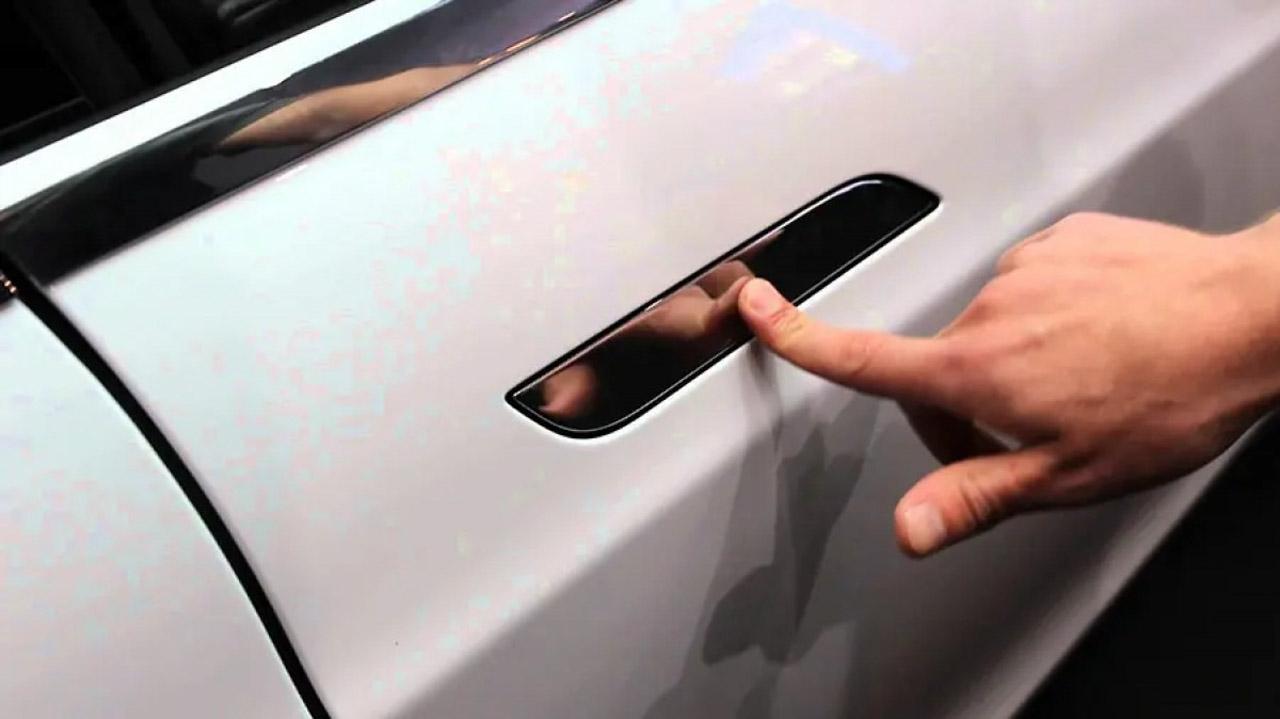
China to Ban Powered Door Handles Over Safety Concerns – What It Means for Automakers
Image: China to Ban Powered Door Handles Over Safety Concerns – What It Means for Automakers – Performance Comparison and Specifications
- Advertisement -
Powered door handles have become a flashy selling point for many premium and mainstream models in China. From the sleek BYD Han to the tech‑laden Tesla Model 3, manufacturers have touted them as a hallmark of modern design and convenience. But a wave of safety incidents is prompting Beijing to consider a full ban starting in 2027. The story first broke on RushLane, and the implications are already rippling through the auto industry.
What Exactly Are Powered Door Handles?
At their core, powered door handles are motorized levers that automatically extend when you approach the vehicle, often triggered by a key fob or a proximity sensor. The technology is usually paired with advanced driver‑assistance systems (ADAS) that can unlock the car as you walk up, creating a seamless, key‑less experience.
- Advertisement -
Why They Took Off in China
China’s market has always been hungry for high‑tech features. The 2022 China Passenger Car Market Report showed a 35% increase in sales of models equipped with powered door handles compared to 2019. Consumers associate the feature with luxury, and manufacturers use it to differentiate in an ultra‑competitive segment.
Safety Risks That Sparked the Ban
Despite the wow factor, several safety concerns have emerged:
- Electrical failures: Faulty wiring can cause the handle to stay extended, increasing the risk of injury during a collision.
- Water ingress: Rain and road splash can short the motor, leading to unexpected handle movement.
- Improper integration with ADAS: In some crash scenarios, the handle fails to retract, compromising the structural integrity of the door.
In 2024, three high‑profile incidents involving the Mercedes‑Benz EQS and a locally produced EV resulted in minor injuries when the handles unintentionally extended during a rear‑end collision. These cases pushed regulators to act.
- Advertisement -
Regulatory Timeline – The Road to 2027
China’s Ministry of Industry and Information Technology (MIIT) issued a draft notice in March 2025, outlining mandatory safety tests for all motor‑driven door hardware. The final ruling, expected by late 2026, will ban any powered handle that does not meet the new Electrical Safety Standard GB/T 34567‑2025. Manufacturers will have until the start of 2027 to retrofit or discontinue affected models.
Impact on Car Design and Manufacturers
The ban forces a rethink on both design language and engineering budgets. Brands that have built their image around sleek, frameless doors will need to find alternative ways to convey premium feel.
Design Adjustments
Many automakers are already sketching mock‑ups that replace motorized levers with high‑gloss manual pulls, often embellished with chrome or carbon‑fiber accents to retain a futuristic vibe. Some are exploring electro‑chromic surfaces that light up on touch, offering a “smart” feel without moving parts.
- Advertisement -
Cost Implications
Powered handles add roughly ¥8,000–¥12,000 ($1,200‑$1,800) to a vehicle’s bill of materials. Removing them can lower production costs, but brands may need to invest in other tech upgrades to keep the vehicle attractive.
Design & Dimensions
| Component | Powered Handle | Manual Handle |
|---|---|---|
| Length (mm) | 120 | 95 |
| Width (mm) | 45 | 38 |
| Weight (g) | 250 | 150 |
Feature Comparison
| Feature | Powered | Manual |
|---|---|---|
| Key‑less entry | Yes | No |
| Automatic retraction | Yes | Never |
| Electric consumption (Wh/100km) | 0.5 | 0 |
| Failure mode | Stuck open/closed | Broken latch |
Engine Specifications (Models Featuring Powered Handles)
| Model | Engine | Power | Torque |
|---|---|---|---|
| BYD Han | Turbo‑petrol 2.0L | 252 hp | 350 Nm |
| Tesla Model 3 | Electric | 283 hp | 420 Nm |
| Mercedes‑Benz EQS | Electric | 469 hp | 620 Nm |
| Honda Accord | Turbo‑petrol 1.5L | 190 hp | 260 Nm |
Price Comparison
| Model | With Powered Handles | Without Powered Handles | Price Difference |
|---|---|---|---|
| BYD Han | ¥219,800 | ¥212,000 | ¥7,800 |
| Tesla Model 3 | ¥329,900 | ¥324,500 | ¥5,400 |
| Mercedes‑Benz EQS | ¥1,020,000 | ¥1,010,000 | ¥10,000 |
| Honda Accord | ¥189,500 | ¥181,700 | ¥7,800 |
What This Means for Consumers
If you’re shopping for a new car in China after 2027, you’ll likely see fewer models advertising “powered door handles.” That doesn’t mean you’ll lose all convenience – most manufacturers will still offer key‑less entry via push‑button locks or smartphone apps. However, the tactile experience of a handle that slides out at a touch will become a rarity, reserved for ultra‑luxury or export‑only models.
Conclusion
The move to ban powered door handles underscores China’s growing emphasis on functional safety over gimmickry. While the feature added a futuristic flair to many vehicles, the underlying risks proved too great for regulators to ignore. Automakers will need to pivot quickly, redesigning doors, reallocating budgets, and perhaps most importantly, communicating the change to an audience that has come to expect cutting‑edge tech on every surface. For buyers, the shift may actually bring down prices and simplify maintenance – a subtle win in an industry that often feels like a race for the next flashier feature.
- Advertisement -
FAQ
- 1. When will the ban on powered door handles officially start?
- The official enforcement date is set for January 1, 2027, pending final approval of the safety standards in late 2026.
- 2. Which car brands are most affected?
- Brands that heavily market the feature – such as BYD, Tesla, Mercedes‑Benz, and several domestic premium makers – will need to redesign or remove the hardware.
- 3. Will existing cars with powered handles be recalled?
- No blanket recall is planned. The regulation applies to new production models; owners can continue using current vehicles.
- 4. Can manufacturers retrofit older models?
- Retrofits are technically possible but are rarely cost‑effective, so most will focus on new designs.
- 5. How does this affect electric vehicles (EVs) specifically?
- Many EVs use powered handles as part of a high‑tech package. Manufacturers may replace them with premium manual designs while retaining other EV‑specific benefits.
- 6. Will the ban impact ADAS functionality?
- Not directly. ADAS systems remain unchanged; the ban only targets the motorized handle mechanism.
- 7. Are there alternative safety‑focused door technologies?
- Yes – some makers are exploring magnetic latch systems and reinforced manual pulls that meet the same crash‑zone standards.
- 8. Will the ban raise car prices?
- In the short term, removing the powered handle can lower costs by ¥5,000‑¥10,000, offsetting any redesign expenses.
- 9. How will this affect overseas markets?
- The ban is China‑specific. Export models may still feature powered handles if they meet their local regulations.
- 10. Where can I find the official safety standard documentation?
- It will be published on the MIIT website under the reference GB/T 34567‑2025 once finalized.
Source: RushLane