Dream Desert Drive: Flat‑Out in the 815 bhp Ford Mustang GTD
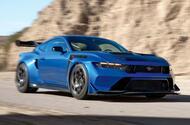
Dream Desert Drive: Flat‑Out in the 815 bhp Ford Mustang GTD – The Most Extreme Mustang Yet
Image: Dream Desert Drive: Flat‑Out in the 815 bhp Ford Mustang GTD – The Most Extreme Mustang Yet – Performance Comparison and Specifications
If you’ve ever imagined a Mustang that could roar through the desert like a race‑car on a leash, the new Ford Mustang GTD is the answer. With a staggering 815 bhp, a dry‑sumped 5.2‑litre supercharged V8, and a chassis ripped straight from IMSA’s Grand Touring Daytona class, this is the most extreme Mustang to ever wear number plates. In this article we’ll unpack the GTD’s racing pedigree, dive into its wild specs, and take a virtual ride along some of America’s most iconic desert roads.
From Le Mans Dream to Desert Beast
Back in the early 2010s Ford flirted with a return to Le Mans, hoping a purpose‑built Mustang could follow in the footsteps of the legendary GT40. The idea fizzled – a big‑framed Mustang simply couldn’t hit the balance‑of‑performance targets without massive compromises. Instead, engineers quietly birthed a track‑only GT3 monster, complete with a rear‑mounted gearbox, Multimatic’s push‑rod suspension, and a carbon‑fibre‑rich body‑in‑white.
When the GT3 podium arrived, Ford decided the road‑going sibling needed its own badge. Enter the GTD – a road‑legal homage to the race car, essentially a “GT3 RS” version of the Mustang. The name comes from IMSA’s Grand Touring Daytona class, not to be confused with any European Golf model.
Engine: A 815 bhp V8 That Sounds Like a Rocket
The heart of the GTD is a 5 163 cc (315 cu in) 90‑degree V8 with a twin‑scroll supercharger. It’s the first Mustang to use a dry‑sumped oil system, keeping the engine low in the chassis and allowing a higher rev ceiling. The crank remains cross‑plane, so the exhaust note is unmistakably American – deep, throaty, and audible from a mile away.
Key figures are mind‑blowing: 815 bhp at 7 400 rpm, 663 lb‑ft of torque at 4 500 rpm, and a redline of 7 650 rpm. The active exhaust valves give you a polite growl in city mode and a full‑blast scream when you crank the throttle.
Engine Specification Table
| Parameter | Value |
|---|---|
| Displacement | 5.2 L (5 163 cc) |
| Induction | Intercooled Twin‑Scroll Supercharger |
| Power | 815 bhp @ 7 400 rpm |
| Torque | 663 lb‑ft @ 4 500 rpm |
| Rev Limit | 7 650 rpm |
| Construction | Forged aluminium pistons, forged steel conrods, forged steel crank |
Chassis & Suspension: When a Road Car Gets a Track‑Day Soul
The GTD sits on a stripped‑down Mustang platform, but the body‑in‑white is sent to Multimatic for a full carbon‑fibre makeover. Front suspension stays a double‑wishbone, while the rear adopts a bespoke aluminium sub‑frame with push‑rod‑actuated multi‑link geometry. This layout frees up space for an eight‑speed dual‑clutch transaxle mounted behind the rear axle, linked to a carbon‑fibre driveshaft.
Multimatic’s ASV spool‑valve dampers are semi‑active: they can change spring rates and ride height on the fly, dropping the car up to 40 mm lower in Track mode. The result is a near‑perfect 50:50 weight distribution and a cockpit that feels more like a race‑car than a cruiser.
Design & Dimensions
| Parameter | Mustang GTD | Standard Mustang GT |
|---|---|---|
| Length | 4 825 mm | 4 785 mm |
| Width (incl. mirrors) | 2 025 mm | 1 861 mm |
| Height | 1 360 mm | 1 380 mm |
| Wheelbase | 2 720 mm | 2 720 mm |
| Curb Weight | 1 989 kg | 1 735 kg |
| Front Track | 1 740 mm | 1 630 mm |
Aero & Tyres: Grip for the Open‑Road
The GTD’s active rear wing can swing from a high‑drag, brake‑assist position to a near‑flat “clean‑air” stance, delivering up to 885 kg of downforce at top speed. Front tyres are massive 325/30 R20 Michelin Pilot Sport Cup 2 R units – the same width as the rear tyres on a Ford GT.
Feature Comparison
| Feature | Mustang GTD | Porsche 911 GT3 RS | Mercedes‑AMG GT Black Series |
|---|---|---|---|
| Power (bhp) | 815 | 520 | 720 |
| Dry‑sump Engine | Yes | No | No |
| Active Aero | Rear wing + front splitter | Fixed rear wing | Active rear wing |
| Suspension Type | Push‑rod rear, double‑wishbone front | MacPherson front, multi‑link rear | Double‑wishbone front & rear |
| Weight (kg) | 1 989 | 1 430 | 1 530 |
Interior: Track‑Focused Yet Surprisingly Daily
Inside, the GTD retains a familiar Mustang layout – a nod to its mass‑market roots – but upgrades are everywhere. Recaro‑style seats are bolstered with carbon‑fibre side bolsters, a near‑round steering wheel houses titanium‑paddles reclaimed from a retired F‑22 Raptor, and the digital instrument cluster offers a dedicated “GTD” mode with lap‑timer, G‑force meter, and tire‑temperature readouts.
Carbon‑fiber trim, a lightweight carbon‑prop shaft, and an optional carbon‑ceramic brake kit round out the cockpit. While the infotainment system still lives on a touchscreen (the heating controls, too), the overall feel is purpose‑built, not frilly.
Performance on the Desert – Real‑World Impressions
Driving the GTD on a desert stretch like the Pines‑to‑Palms Highway feels like unleashing a wild stallion. The massive front tyres bite into sand‑loose surfaces, while the semi‑active dampers keep the car planted on the occasional washboard patch. Acceleration from 0‑60 mph is under 3 seconds, and a top‑speed of 200 mph is officially quoted.
At low speeds, the cabin feels a bit firm – the suspension is tuned for high‑G cornering, not city cruising – but once you hit the open road, the GTD becomes eerily composed. The limited‑slip differential and 664 lb‑ft of torque in the mid‑range give you a confident push through each corner, and the steering, despite the massive front tires, offers a surprisingly direct feel.
Fuel Economy & Practicality
Don’t expect a Prius‑like figure. In mixed driving the GTD sips around 12‑14 mpg (US). The rear seat is deleted, leaving a small luggage compartment behind a rear hatch – just enough for a weekend bag or a set of spare tires. The car is LHD only, with a limited production run of roughly 1 000 units worldwide.
Price Comparison
| Market | Approx. Price (USD) | Approx. Price (GBP) |
|---|---|---|
| United States | $315,000 | £240,000 |
| Europe (UK) | $350,000 | £270,000 |
| Middle East | $340,000 | £260,000 |
| Australia | $420,000 | £320,000 |
Why the GTD Matters for Mustang Fans
For decades the Mustang has been America’s muscle icon, but it’s rarely been a track‑day monster in factory form. The GTD flips that narrative. It’s a road‑legal, street‑ready car that can still lap the Nürburgring Nordschleife in 6 min 52 sec – just three seconds slower than a 911 GT3 RS. In a market saturated with lightweight European exotics, the GTD proves that a V8‑powered, rear‑drive American pony can compete on the same playground.
Whether you’re planning a desert rally, a weekend at the California coast, or simply dreaming of a track‑day weekend, the Mustang GTD offers a unique blend of raw American sound, race‑derived technology, and everyday usability (if you can handle the fuel bill).
Conclusion
The Ford Mustang GTD is more than a “special edition” – it’s a statement that the Mustang’s racing heritage is alive and kicking. With 815 bhp, a dry‑sumped supercharged V8, active aero, and Multimatic’s most sophisticated suspension ever, it delivers a desert‑driving experience that feels both savage and controlled. If you ever get the chance to sit behind its wheel, be prepared for a roar that will echo across the dunes and a ride that will redefine what you expect from an American muscle car.
Frequently Asked Questions
1. Is the Mustang GTD legal for road use?
Yes. It meets all DOT and EPA regulations, making it fully road‑legal in the United States and most export markets.
2. How many Mustang GTDs will be produced?
Ford limited the run to roughly 1 000 units worldwide.
3. Does the GTD have any driver‑assist systems (ADAS)?
It includes essential safety aids such as traction control, forward‑collision warning, and a rear‑view camera, but the focus is on driver engagement rather than full‑suite autonomy.
4. Can I get a manual transmission?
No. The GTD is equipped with an eight‑speed dual‑clutch automatic transaxle, tuned for lightning‑quick shifts.
5. What is the curb weight compared to a regular GT?
The GTD weighs 1 989 kg, about 250 kg heavier than a standard Mustang GT due to carbon‑fibre components, the transaxle, and the extensive suspension hardware.
6. How does the fuel economy compare to a regular Mustang?
Expect roughly 12‑14 mpg (US) in mixed driving, considerably lower than the GT’s ~18 mpg.
7. Are there any optional upgrades?
Ford offers a carbon‑ceramic brake kit, a track‑only data‑logger, and an optional carbon‑fibre rear wing with adjustable angles.
8. What tyres does the GTD use?
Michelin Pilot Sport Cup 2 R 325/30 R20 front and rear, the same width as the Ford GT’s rear tyres.
9. Is there any luggage space?
The rear seat is deleted, leaving a modest trunk area accessed via a rear hatch – enough for a weekend bag.
10. Where can I read more about the GTD’s development?
Ford’s official press release and in‑depth coverage can be found at ford.com.