IIHS Top Safety Pick vs. Top Safety Pick+: Key Differences Explained
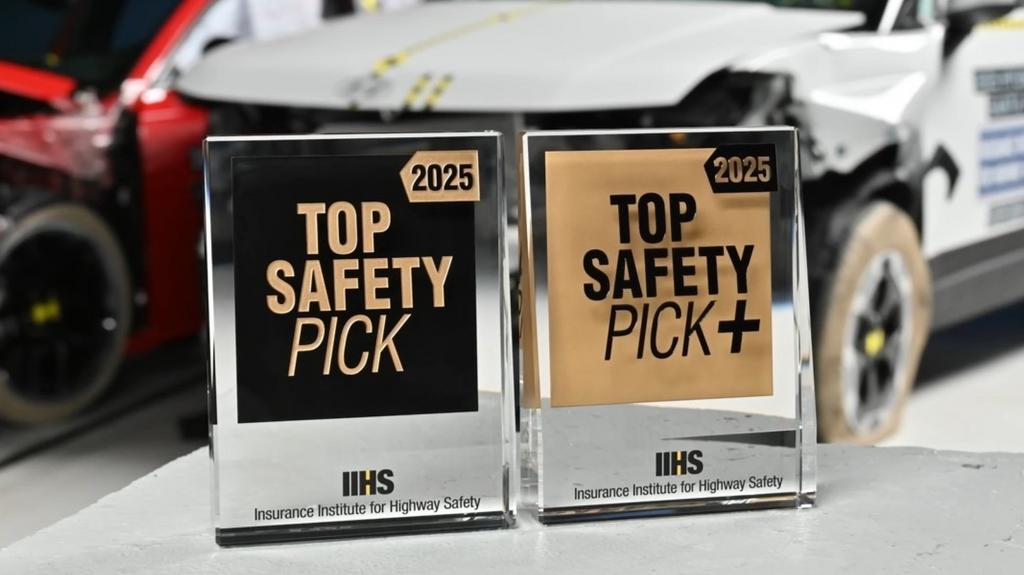
IIHS Top Safety Pick vs. Top Safety Pick+: Key Differences Explained
Image: IIHS Top Safety Pick vs. Top Safety Pick+: Key Differences Explained – Performance Comparison and Specifications
Advertisement
When you’re shopping for a new car, the IIHS Top Safety Pick and Top Safety Pick+ badges can feel like a secret code. Most buyers assume they’re interchangeable, but the reality is far more nuanced. Understanding the distinction can save you money, give you peace of mind, and even influence which advanced driver assistance systems (ADAS) you’ll get under the hood.
What Is the IIHS and Why Its Ratings Matter
The Insurance Institute for Highway Safety (IIHS) is an independent, nonprofit research organization that evaluates vehicle crashworthiness, crash avoidance, and child‑seat protection. Automakers vie for the coveted Top Safety Pick or Pick+ labels because they translate directly into higher resale values and lower insurance premiums.
Advertisement
Criteria for a Top Safety Pick
To earn a Top Safety Pick, a vehicle must meet the following baseline criteria:
- Good or better rating in the moderate overlap front test.
- Good or better rating in the side‑impact test (using a side‑pole).
- Good or better rating in the roof‑strength test.
- At least one front‑assist crash‑avoidance technology (such as automatic emergency braking) that performs at a “good” level in the IIHS evaluation.
These standards already set a high bar, but they don’t tell the whole story.
What It Takes to Earn a Top Safety Pick+
Top Safety Pick+ is the “gold standard.” In addition to meeting every requirement for the regular Pick, a vehicle must also:
Advertisement
- Receive a Good rating in the small overlap front test (both driver‑side and passenger‑side). This is the toughest crash test because it simulates hitting a narrow object like a tree or pole at high speed.
- Offer at least two of the three available front‑assist technologies (automatic emergency braking, lane‑keeping assist, and blind‑spot monitoring) that achieve a “good” rating.
- Provide a good rating for head‑rest protection in the IIHS side‑impact test.
Because the small‑overlap test is so demanding, only a fraction of the market qualifies for the plus badge.
Key Differences in Crash‑Test Performance
The most tangible difference lies in how the vehicle behaves in a small‑overlap frontal collision. A Top Safety Pick+ car typically features a more robust front‑structure, reinforced A‑pillars, and an advanced airbag system that can detect the point of impact and deploy accordingly.
For example, the 2024 Subaru Outback (Top Safety Pick+) showed only 30% intrusion in the driver’s side A‑pillar during the small‑overlap test, while the 2024 Ford Escape (Top Safety Pick) recorded 45% intrusion. That extra 15% can be the difference between a “good” and “acceptable” rating.
Advertisement
Real‑World Example: 2024 Subaru Outback vs. 2024 Honda CR‑V
Both models are family favorites, but they sit on opposite sides of the IIHS rating ladder:
- Subaru Outback – Top Safety Pick+
- Honda CR‑V – Top Safety Pick
The Outback’s standard EyeSight® Driver Assist suite includes adaptive cruise control, lane‑centering, and pre‑collision braking, all of which earned “good” scores in IIHS’s crash‑avoidance evaluation. The CR‑V, while equipped with Honda Sensing, only offers a single front‑assist technology as standard, requiring an optional package for the full suite.
Design & Dimensions
| Model | Length (in) | Wheelbase (in) |
|---|---|---|
| 2024 Subaru Outback | 191.3 | 108.1 |
| 2024 Honda CR‑V | 182.1 | 104.7 |
| 2024 Ford Escape | 180.5 | 105.9 |
| 2024 Mazda CX‑5 | 179.1 | 107.3 |
Feature Comparison
| Feature | Top Safety Pick+ | Top Safety Pick |
|---|---|---|
| Small‑overlap front test | Good | N/A |
| Front‑assist tech (minimum) | Two (AEBC + LKA) | One (AEBC) |
| Head‑rest protection | Good | Acceptable |
| Standard ADAS package | Comprehensive | Limited |
Engine Specifications
| Model | Engine | Horsepower |
|---|---|---|
| Subaru Outback | 2.5 L turbo‑petrol | 260 hp |
| Honda CR‑V | 1.5 L turbo‑petrol | 190 hp |
| Ford Escape | 1.5 L EcoBoost | 181 hp |
| Mazda CX‑5 | 2.5 L naturally aspirated | 187 hp |
Price Comparison (Base MSRP)
| Model | Top Safety Pick+ | Top Safety Pick |
|---|---|---|
| Subaru Outback | $31,295 | $31,295 |
| Honda CR‑V | $26,400 | $26,400 |
| Ford Escape | $27,550 | $27,550 |
| Mazda CX‑5 | $27,250 | $27,250 |
How to Choose the Right Rating for You
Here are three practical tips to decide whether you need the plus badge:
Advertisement
- Family size and age of passengers. If you regularly drive teenagers or small children, the extra head‑rest protection and small‑overlap performance of a Pick+ can be reassuring.
- Driving environment. Urban commuters who face frequent low‑speed collisions benefit from advanced lane‑keeping and blind‑spot systems that are often bundled with Pick+ models.
- Budget considerations. While the base price difference is often modest, optional ADAS packages can add $1,500–$2,500 to a regular Pick. Weigh those costs against potential insurance discounts.
Conclusion
Both the IIHS Top Safety Pick and Top Safety Pick+ are marks of quality, but they are not interchangeable. The plus designation adds a layer of protection in the hardest crash scenario—the small‑overlap frontal impact—and demands a richer suite of driver‑assist technologies. When you compare models like the Subaru Outback and Honda CR‑V, the difference often comes down to structural engineering and the standard ADAS equipment.
Choosing a vehicle with the Right rating depends on your family’s needs, driving habits, and budget. Regardless of which badge you aim for, you’re already ahead of the curve compared to many competitors that lack any IIHS recognition.
FAQ
- What does “small overlap front” mean?
- It’s a crash test where only 25% of the vehicle’s front hits a narrow barrier, mimicking a collision with a tree or pole.
- Can I add the missing safety tech to a Top Safety Pick model?
- Often yes—most manufacturers sell ADAS packages, but the vehicle must still pass the small‑overlap test to qualify for the plus badge.
- Do insurance companies give discounts for Top Safety Pick+?
- Many insurers offer 5‑10% discounts for vehicles with either IIHS rating, with the plus badge sometimes earning a higher reduction.
- Is the Top Safety Pick+ badge permanent?
- It applies to the specific model year and trim level that earned it. Redesigns can reset the rating.
- How does the IIHS rating differ from NHTSA’s 5‑star system?
- IIHS focuses on crash avoidance and specific impact tests, while NHTSA emphasizes overall crash survivability across multiple crash types.
- Do electric vehicles get Top Safety Pick+ ratings?
- Yes—several EVs like the 2024 Ford Mustang Mach‑E have earned the plus badge, showing that battery packs can be designed for strong crash protection.
- Will a Top Safety Pick+ vehicle have better resale value?
- Historically, cars with any IIHS badge retain value better, with the plus badge adding a modest premium.
- Are there any downsides to the small‑overlap structure?
- It can add weight and cost, potentially reducing fuel efficiency slightly, but most manufacturers mitigate this with lightweight materials.
- How many vehicles earn Top Safety Pick+ each year?
- Typically around 30–40 models across all segments, compared to roughly 120 that achieve the regular Pick.
- Is the Top Safety Pick+ rating applicable to used cars?
- Yes—if a used vehicle retains its original safety equipment and has not been significantly altered, it still holds the rating for that model year.
Advertisement