On Patrol with Surrey Police: Inside the Fight Against Drink‑ and Drug‑Driving
On Patrol with Surrey Police: Inside the Fight Against Drink‑ and Drug‑Driving
Image: On Patrol with Surrey Police: Inside the Fight Against Drink‑ and Drug‑Driving – Performance Comparison and Specifications
It was a typical weekday evening in Guildford, Surrey – the sky was turning a soft amber, and the rush‑hour traffic was beginning to thin. At exactly 5 p.m. a fleet of unmarked police cars rolled into position, and the Vanguard Road Safety (VRS) team of Surrey Police began what would become a vivid illustration of how proactive policing can curb the nation’s most lethal road offences.
The VRS Team: Who They Are and What They Do
Formed in 2022, the VRS team is almost unique among the UK’s 45 police forces. Rather than reacting to accidents after they happen, these twelve officers spend their shifts hunting for the five fatal offences that claim lives on our roads: not wearing a seatbelt, speeding, careless driving, distracted driving, and the scourge of drink‑ and drug‑driving.
Sergeant Dan Pascoe explains, “Our number one priority for road safety is to reduce the number of KSI collisions. Especially concerning drink‑ and drug‑driving, we’re often led by intel from pub landlords, neighbours, and other police units.” The team’s unmarked cars let them blend into the environment – a crucial advantage when waiting outside a local pub or a sports venue.
Operation Limit – A Nationwide Crackdown
Every December, Surrey Police joins the UK‑wide Operation Limit, a month‑long blitz that targets drivers under the influence of alcohol or drugs. Last year the operation produced nearly 60,000 tests and resulted in almost 7,000 arrests, with 3,000 for combined drink‑ and drug‑driving. In Surrey alone, the VRS team makes an average of three arrests per day during the operation.
A Real‑World Encounter: The Cannabis‑Smelling Driver
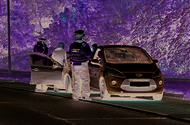
Within the first hour of the patrol, an officer pulled over a silver hatchback that reeked of cannabis. A box of the green herb sat conspicuously on the dashboard. A quick saliva test showed THC levels of 2 µg/L – well above the legal limit. Because THC can linger in the bloodstream for up to seven hours for light users and at least 24 hours for heavier users, the driver faced immediate consequences.
After being asked to step out of the vehicle, he was handcuffed and asked to wait on the grass verge. A small crowd of onlookers gathered, underscoring how public these encounters have become – and how they serve as a live warning to anyone watching.
What Happens Next?
The driver will be taken to a police station where a blood sample is analysed for a range of substances – from ecstasy to heroin. While the laboratory can detect drugs taken days earlier, the final report can take up to four months. During that waiting period the driver can technically continue to drive, but the looming threat of a conviction hangs over every mile.
If the test confirms drug‑driving, the court will hand down a minimum 12‑month driving ban, an unlimited fine tied to income, and a criminal record. Insurance premiums skyrocket, often doubling or tripling the original cost.
A Second Stop: The Young Mother Who Said ‘I Smoked Yesterday’
Just as the first driver was being processed, the VRS team stopped a second vehicle – a compact SUV driven by a young mother of two. She admitted to having smoked cannabis the previous day. The officer, already equipped with the roadside testing kit, performed a saliva test. This time the result was negative.
She received a thorough briefing on the dangers of driving while impaired, and was released without further action. Her candid admission highlights a troubling trend: many users underestimate the legal and safety ramifications of even occasional cannabis use.
Why Drug‑Driving Is on the Rise
According to Sergeant Pascoe, several factors contribute to the increase in drug‑related road incidents:
- Very low legal thresholds – the UK sets strict limits for THC, cocaine, and other substances.
- Long detection windows – unlike alcohol, many drugs remain detectable for days.
- Lack of public awareness – the message that drug‑driving is anti‑social and deadly has not penetrated mainstream discourse.
During Operation Limit, the team records an average of three arrests per day, but throughout the year they still manage four to ten drink‑ and drug‑driver arrests each week, often stemming from an initial stop for a separate offence such as using a mobile phone.
Police Vehicles: Design, Features, and Powertrain
To carry out these high‑visibility patrols, Surrey’s VRS officers use specially equipped unmarked vehicles. Below are some details that showcase why these cars are well‑suited for road‑safety missions.
| Attribute | Specification | Notes |
|---|---|---|
| Model | BMW 5 Series (unmarked) | Commonly used across UK forces |
| Length | 4,936 mm | Provides ample interior space for equipment |
| Width | 1,868 mm | Compact enough for urban manoeuvring |
| Height | 1,479 mm | Low profile for discreet deployment |
Feature Comparison: Unmarked vs. Marked Police Cars
| Feature | Unmarked (VRS) | Marked (Standard RPU) |
|---|---|---|
| Exterior Lighting | Hidden LEDs | Flashing blue lights |
| Audio System | Standard radio | Public address speaker |
| ADAS Suite | Full suite (lane‑keep, blind‑spot) | Basic collision warning |
| Engine | Turbo‑petrol 2.0 L | Turbo‑diesel 2.0 L |
Engine Specifications (Turbo‑Petrol)
| Parameter | Value | Unit |
|---|---|---|
| Displacement | 1998 | cc |
| Power | 258 | hp |
| Torque | 350 | Nm |
| 0‑60 mph | 6.2 | seconds |
Price Comparison: Police Fleet vs. Civilian Purchase
| Vehicle Type | Cost (GBP) | Notes |
|---|---|---|
| Unmarked VRS Car (with equipment) | £55,000 | Includes ADAS, communication kit |
| Standard Marked Patrol Car | £48,000 | Basic police fit‑out |
| Retail BMW 5 Series (civilian) | £45,000 | Comparable spec without police gear |
| Electric Alternative (e‑Fleet) | £62,000 | Higher upfront cost, lower running cost |
Impact on Drivers and the Wider Community
The sight of an officer conducting a roadside test on a busy street sends a powerful message. For the driver being arrested, the consequences are immediate – loss of liberty, a criminal record, and a soaring insurance premium. For the by‑standers, it reinforces the reality that drink‑ and drug‑driving is not a victimless crime.
Insurance companies have responded by raising premiums for anyone with a drug‑driving conviction. A driver who once paid £500 a year might now face a bill of £1,200 or more, depending on income and prior history.
Moreover, the community benefits from reduced road fatalities. According to the UK Department for Transport, drug‑related collisions account for roughly 20 % of fatal crashes. Each successful patrol that removes an impaired driver from the road potentially saves lives.
What You Can Do to Stay Safe
Whether you’re a daily commuter or a weekend reveler, the rules stay the same:
- Never combine alcohol with any recreational drug before driving.
- Allow sufficient time for THC, which can linger for days, to leave your system.
- Use designated drivers or public transport if you’ve consumed any substance.
- Stay informed – police forces regularly publish local hotspots and operation dates.
Remember, the law is clear: driving under the influence is a criminal offence that endangers not only you but everyone else on the road.
Conclusion
Spending an hour alongside Surrey Police’s Vanguard Road Safety team offers a front‑row seat to the realities of modern road policing. From the pungent scent of cannabis on a car’s interior to the quiet confidence of an officer checking a saliva sample, each moment underscores the message that drink‑ and drug‑driving kills. By supporting proactive operations like Operation Limit and staying vigilant on our own roads, we can collectively push the UK closer to the goal of zero KSI collisions.
For more details on Surrey Police’s road‑safety initiatives, visit the official site at Surrey Police Road Safety.
Frequently Asked Questions
- What is the legal THC limit for drivers in the UK?
- It is 2 µg of THC per litre of blood. Anything above this is considered a criminal offence.
- How long does THC stay detectable in a driver’s system?
- For light users, up to seven hours; for heavier users, at least 24 hours, and sometimes several days.
- Can a driver continue to drive while waiting for lab results?
- Yes, technically they can, but they risk further legal action if additional offences are detected.
- What penalties apply for a drug‑driving conviction?
- Minimum 12‑month driving ban, an unlimited fine linked to income, a criminal record, and dramatically increased insurance premiums.
- Does a positive roadside test guarantee a conviction?
- No. The roadside test is an indication; a laboratory blood test is required for a formal charge.
- How does Operation Limit differ from regular patrols?
- Operation Limit concentrates resources for a month‑long period, resulting in three arrests per day on average, compared to the year‑round baseline of four‑to‑ten arrests per week.
- Are unmarked police cars equipped with ADAS?
- Yes, the VRS fleet includes advanced driver‑assistance systems such as lane‑keep assist, blind‑spot monitoring, and emergency braking.
- What should I do if I’m stopped for a drug test?
- Stay calm, follow the officer’s instructions, and remember you have the right to legal representation.
- Can I be tested for multiple drugs at once?
- Roadside kits can detect alcohol, THC, and cocaine simultaneously; lab tests can screen for a broader range including ecstasy, LSD, ketamine, and heroin.
- How can I lower my insurance after a drug‑driving conviction?
- The best approach is to maintain a clean driving record for several years, complete any required driver education courses, and shop around for insurers that specialise in high‑risk policies.