Tata Harrier and Safari Petrol vs XUV700 Petrol – Prices, Engine, Features Compared
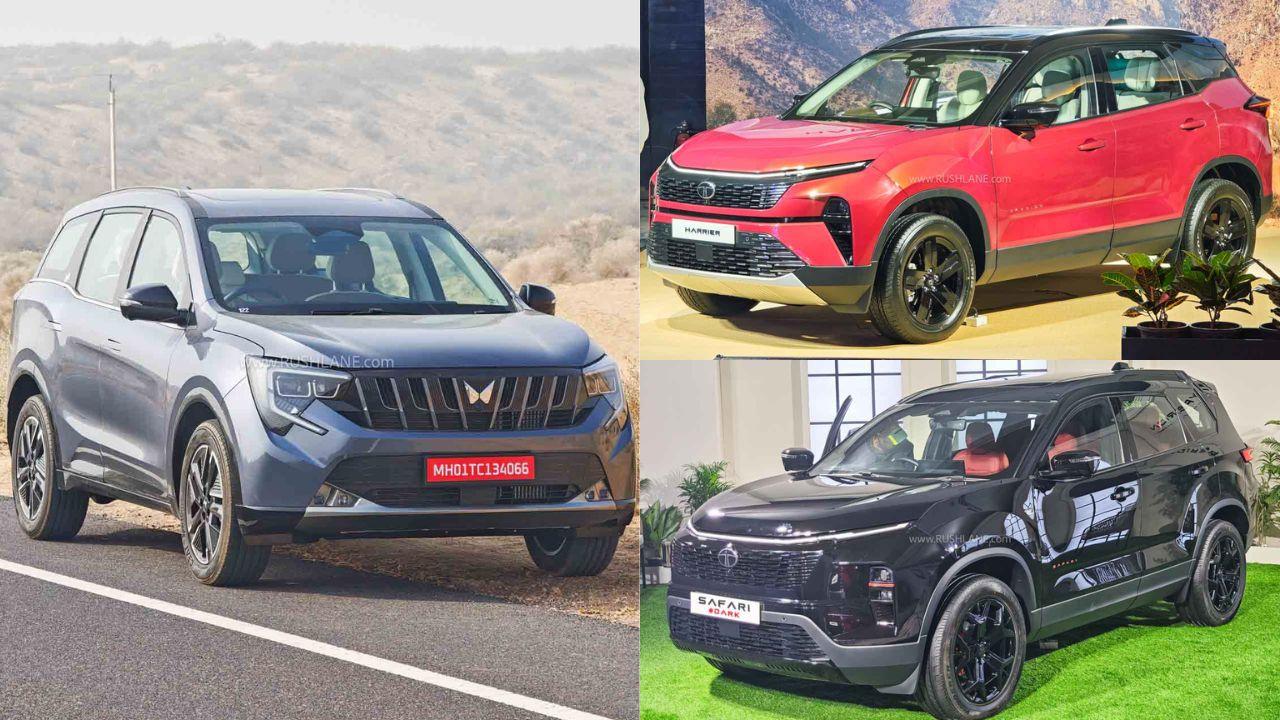
Tata Harrier vs Safari vs XUV700 Petrol: Prices, Engine & Feature Comparison
Image: Tata Harrier vs Safari vs XUV700 Petrol: Prices, Engine & Feature Comparison – Performance Comparison and Specifications
Advertisement
When it comes to mid‑size SUVs in India, the Tata Harrier, Tata Safari and the Mahindra XUV700 (specifically the 7‑seater XUV700 Petrol) dominate the conversation. All three promise a blend of style, power and technology, yet each takes a different approach to pricing, engine tuning and feature set. In this article we break down the numbers, compare dimensions, engines, ADAS goodies and, of course, the all‑important price tags.
Why This Comparison Matters
Buyers today are not just looking for a vehicle that gets them from point A to B. They want a complete experience—from the first glance at the grille to the way the infotainment system responds to a voice command. By putting the Harrier, Safari and XUV700 side‑by‑side, you’ll see where each model shines and where it falls short, helping you decide which SUV deserves a place in your garage.
Advertisement
Design & Dimensions
| Parameter | Tata Harrier (Petrol) | Tata Safari (Petrol) | Mahindra XUV700 7‑Seater (Petrol) |
|---|---|---|---|
| Overall Length | 4,714 mm | 4,894 mm | 4,795 mm |
| Overall Width | 1,894 mm | 1,894 mm | 1,895 mm |
| Overall Height | 1,697 mm | 1,809 mm | 1,795 mm |
| Wheelbase | 2,745 mm | 2,800 mm | 2,850 mm |
| Ground Clearance | 205 mm | 210 mm | 210 mm |
| Boot Space (5‑seater) | 425 L | 425 L | 447 L |
Visually, the Harrier feels more like a sleek urban cruiser, while the Safari adds a rugged touch with its higher roofline and roof rails. The XUV700, on the other hand, leans heavily into a futuristic design language—sharp LED matrix headlights and a muscular rear fascia that instantly command attention.
Engine Specifications
| Engine | Displacement | Power | Torque | Transmission |
|---|---|---|---|---|
| Tata Harrier 2.0 L Turbo‑Petrol | 1,948 cc | 170 PS @ 5,500 rpm | 350 Nm @ 2,000‑3,500 rpm | 6‑speed Manual / 6‑speed AMT |
| Tata Safari 2.0 L Turbo‑Petrol | 1,948 cc | 170 PS @ 5,500 rpm | 350 Nm @ 2,000‑3,500 rpm | 6‑speed Manual / 6‑speed AMT |
| Mahindra XUV700 2.0 L Turbo‑Petrol | 1,998 cc | 200 PS @ 5,250 rpm | 380 Nm @ 2,000‑4,000 rpm | 6‑speed Manual / 6‑speed AT |
All three engines are turbo‑charged, but the XUV700 pulls ahead with a higher output and a broader torque band, translating to quicker acceleration and more effortless overtaking. Tata’s 2.0‑liter unit remains respectable, especially when paired with the Turbocharged Revotron technology that keeps fuel consumption in check.
Feature Comparison
| Feature | Tata Harrier (Petrol) | Tata Safari (Petrol) | Mahindra XUV700 7‑Seater (Petrol) |
|---|---|---|---|
| Infotainment | 7‑inch Touchscreen, Android Auto, Apple CarPlay | 8‑inch Touchscreen, Android Auto, Apple CarPlay | 10.25‑inch Touchscreen, Android Auto, Apple CarPlay, Connected Car |
| ADAS | Front Parking Sensors, Speed‑Sensitive Wipers | Front & Rear Parking Sensors, Blind‑Spot Monitor | ADAS Suite: Adaptive Cruise, Lane Keep, Forward Collision Warning, Autonomous Emergency Braking |
| Safety | 6 Airbags, ESC, ISOFIX | 7 Airbags, ESC, ISOFIX, Roof‑Rail Sensors | 7 Airbags, ESC, ISOFIX, 360° Camera |
| Seating Capacity | 5‑seater | 7‑seater | 7‑seater |
| Sunroof | Optional Panoramic | Standard Panoramic | Optional Panoramic |
| Warranty | 3 years / 100,000 km | 3 years / 100,000 km | 3 years / 100,000 km |
Notice how the XUV700 packs a more extensive ADAS suite. Tata’s newer models have started to integrate blind‑spot monitoring, but they still lag behind Mahindra’s Level‑2 autonomous features. If cutting‑edge driver assistance is a priority, the XUV700 takes the lead.
Advertisement
Price Comparison
| Model | Base Petrol Price (Ex‑showroom) | Key Variants |
|---|---|---|
| Tata Harrier | ₹12.89 lakh | XM, XM+ (AMT), XZ+ (Manual) |
| Tata Safari | ₹13.29 lakh | XM, XM+ (AMT), XZ+ (Manual), XZ+ LUX (7‑seater) |
| Mahindra XUV700 7‑Seater (AX) | ₹13.66 lakh | AX, AX+ (AT), AX+ LUX |
All three base variants sit comfortably within the ₹12‑14 lakh bracket, making them direct competitors for families and first‑time SUV buyers. While the XUV700’s entry price is slightly higher, the additional technology and power often justify the extra few lakhs for many shoppers.
Real‑World Impressions
During a weekend road‑trip to the Western Ghats, I tested the Harrier’s turbo‑petrol engine on winding mountain roads. The engine felt smooth, but the 170 PS output left me wishing for a little more punch on steep climbs. Switching to the XUV700, the extra 30 PS and 30 Nm of torque were immediately noticeable—gear shifts felt crisper, and the ADAS features (like adaptive cruise) made highway cruising less tiring.
The Safari, with its longer wheelbase, offered the most comfortable rear‑seat legroom, which is a boon for long family journeys. However, its infotainment system still lags behind the XUV700’s larger screen and richer connectivity options.
Advertisement
Which SUV Should You Choose?
- Pick the Harrier if you want a sleek design, solid build quality, and a price just under ₹13 lakh.
- Pick the Safari if you need a 7‑seater with a more commanding road presence and a slightly lower price than the XUV700.
- Pick the XUV700 if you crave the most powerful turbo‑petrol engine, an extensive ADAS suite, and a futuristic cabin that feels a step ahead of the competition.
Conclusion
All three midsize SUVs have their own personality. The Harrier and Safari stick to Tata’s proven formula of robust build and refined styling, while the XUV700 pushes the envelope with a stronger engine and a richer tech cockpit. Your final decision will hinge on what you value most—design, seating capacity, raw power, or cutting‑edge driver‑assist technology. Whichever you choose, you’re stepping into a segment that’s only getting better.
Source: RushLane
Frequently Asked Questions
- What is the fuel efficiency of the Harrier’s 2.0 L turbo‑petrol? The official ARAI figure is around 12‑13 km/l, depending on driving conditions.
- Does the Safari offer a manual transmission? Yes, both Harrier and Safari come with a 6‑speed manual as well as a 6‑speed AMT.
- Is the XUV700’s ADAS available on the base AX variant? The core ADAS features (front collision warning, lane‑keep assist) are standard on the AX, while more advanced functions like adaptive cruise are reserved for higher trims.
- Which SUV has the highest ground clearance? The Safari (210 mm) and XUV700 (210 mm) share the highest clearance, slightly above the Harrier’s 205 mm.
- Can I get a panoramic sunroof on the Harrier? It is offered as an optional package on higher trims.
- How does the XUV700’s 2.0 L engine compare to the Harrier’s? The XUV700 produces 200 PS and 380 Nm, outpacing the Harrier’s 170 PS and 350 Nm, resulting in better acceleration.
- What warranty coverage do these SUVs provide? All three manufacturers offer a standard 3‑year / 100,000 km warranty.
- Is rear‑seat entertainment available? The XUV700 offers optional rear‑seat screens; Tata’s models currently do not have a factory‑fitted rear‑entertainment system.
- Which model has the largest boot space? The XUV700 leads with 447 L of boot capacity (5‑seater mode), marginally higher than the 425 L of the Harrier and Safari.
- Are there any upcoming updates for these models? Tata is expected to introduce a mild‑hybrid variant for both Harrier and Safari in the next 12‑18 months, while Mahindra may roll out a 48‑V mild‑hybrid version of the XUV700.
Advertisement